


Compare an EOR and Korean subsidiary for hiring in Korea, including control, cost, compliance, payroll and when to establish your own entity.

14
Oct
Oct
Explore seven practical reasons foreign companies invest in South Korea, including its advanced industries, skilled workforce, infrastructure and foreign investment framework.

13
Oct
Oct
Seven practical differences Japanese headquarters should understand when managing a Korean subsidiary, branch, payroll and local compliance.
Case Studies, Doing Business in Korea
Case Study: Correcting a Korea Market-Entry Structure That Did Not Fit the Business

30
Sep
Sep
How KTE reviewed a Korea branch structure that did not match the client’s actual operating model, identified priority issues and helped stabilize local compliance and administration.

30
Sep
Sep
How KTE supports a global EOR provider with practical Korea payroll cost simulations, clear assumptions and responsive local guidance before and after hiring.
Doing Business in Korea
Korea Bookkeeping for Foreign Companies: Monthly Closing and HQ Reporting Guide

27
Sep
Sep
Korea bookkeeping for foreign companies involves more than recording transactions. This guide explains monthly closing, supporting documents, tax coordination and English reporting for overseas headquarters.
Case Studies, Payroll in Korea
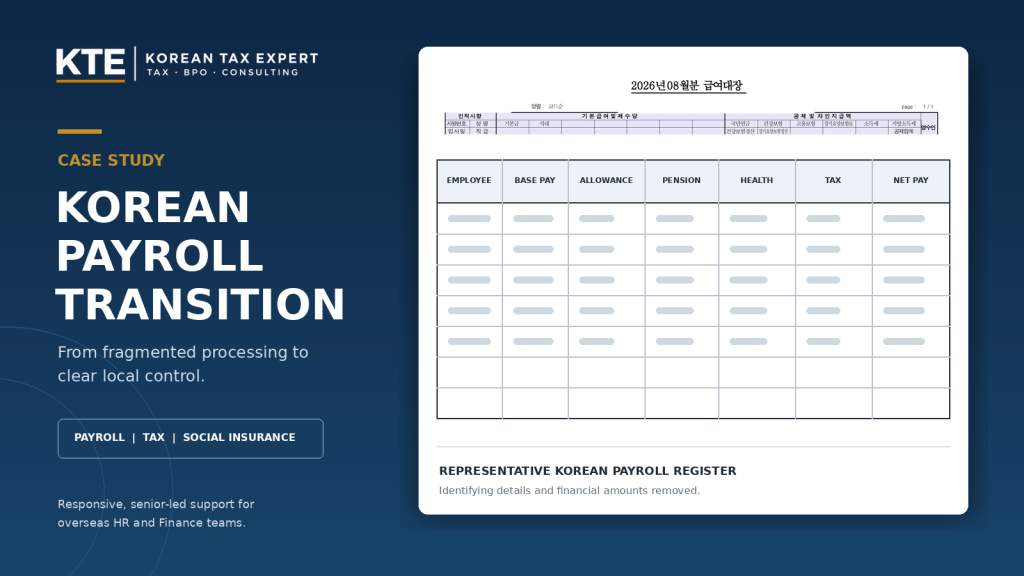
Case Study: From Payroll Provider Transition to Stable Complex Payroll Operations in Korea
25
Sep
Sep
How STAR TAX & BPO transitioned and stabilized complex Korean payroll for a foreign-invested company with approximately 100 employees, including foreign workers, fixed-term staff, complex bonuses and labor-inspection support.
Case Studies, Doing Business in Korea
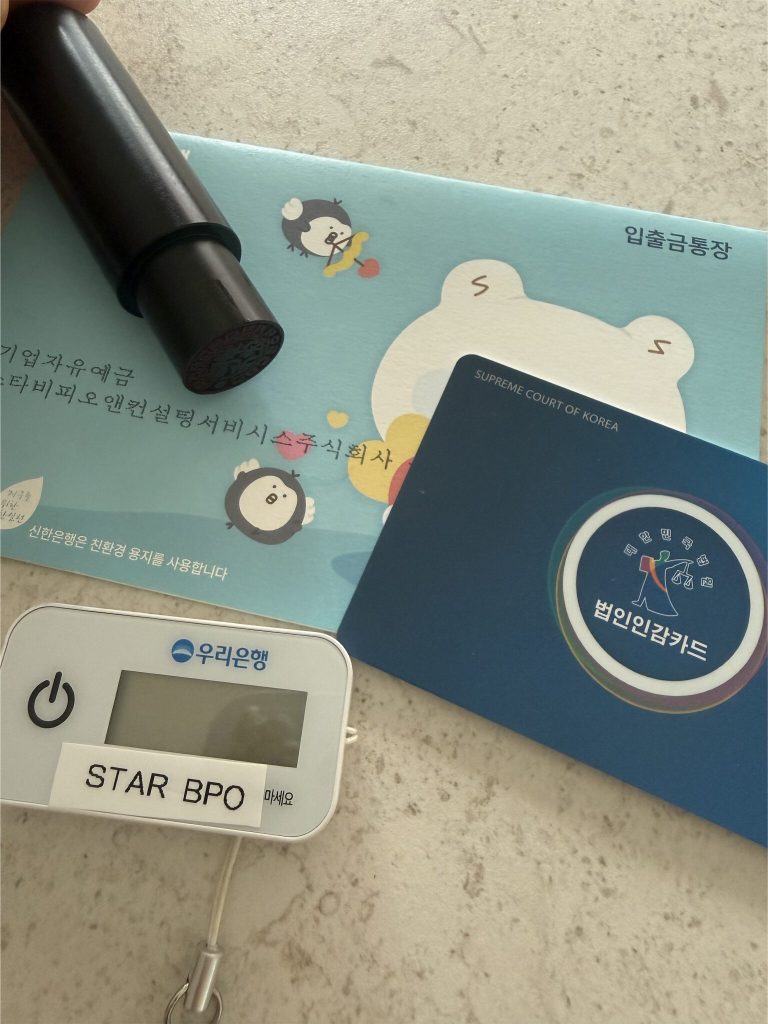
Case Study: Establishing a Korean Subsidiary Under Enhanced KYC and UBO Review
24
Sep
Sep
How STAR TAX & BPO helped an overseas company establish a Korean subsidiary, manage enhanced KYC and UBO checks, address director privacy and complete its corporate banking setup.

23
Sep
Sep
Foreign employers planning their 2027 Korea payroll budget should account for the KRW 10,700 minimum wage, the 10% National Pension rate, severance and practical funding controls.

20
Aug
Aug
Calculate the cost of hiring an employee in Korea in 2026, including employer social insurance contributions and statutory severance.

19
Aug
Aug
Learn how Korea severance pay is calculated, who qualifies, the 14-day payment deadline, DB and DC retirement pensions, and mandatory IRP transfer rules.
Expat payroll in Korea must capture overseas pay, shadow payroll, tax equalization and equity. Learn the controls foreign employers need.

31
Jul
Jul
earn how unemployment benefits in Korea affect employer reporting, separation reasons, the 180-day rule and job-separation documentation.
Terminating an employee in Korea requires just cause, written notice and careful payroll handling. Learn the key rules for foreign employers.
Korea year-end tax settlement requires employers to finalize annual wage tax. Learn the process, foreign employee issues and payroll risks.