
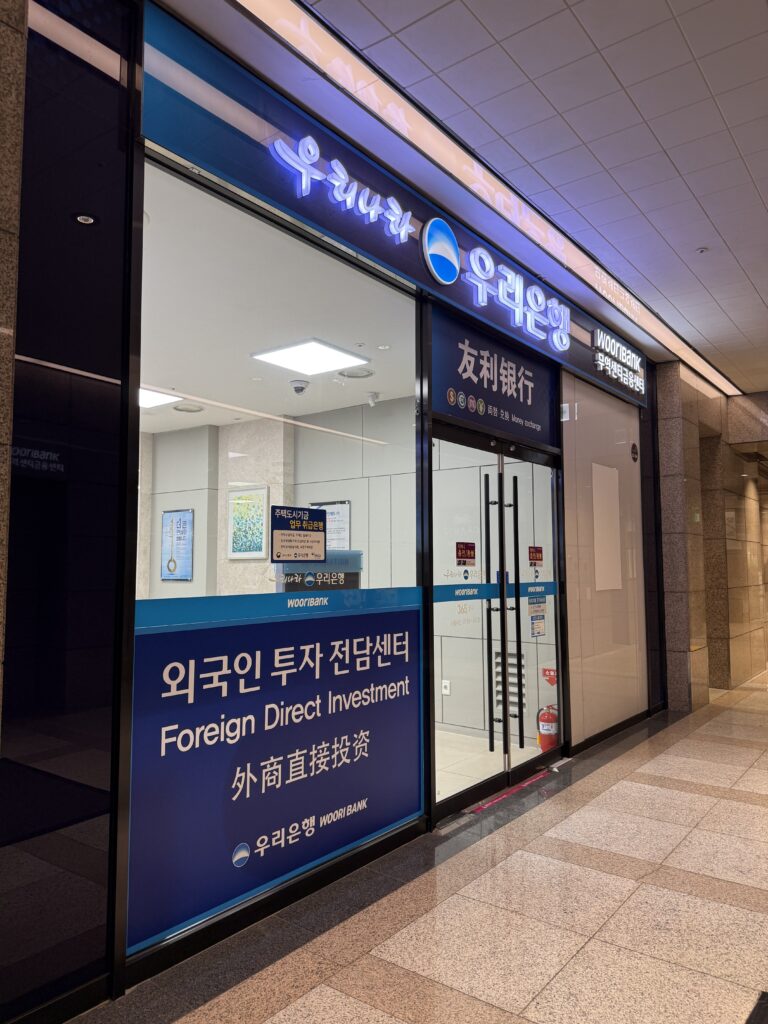
Opening a corporate bank account Korea is essential.
Opening a corporate bank account in Korea is one of the most critical steps for foreign companies establishing a Korean subsidiary. Without a local bank account, your company cannot receive capital injections, pay employees, settle taxes, or conduct normal business operations.
However, due to strengthened anti-money laundering (AML) regulations and enhanced Know Your Customer (KYC) requirements, opening a corporate bank account in Korea has become significantly more complex for foreign-owned entities.
This guide explains the complete process, requirements, timeline, and common pitfalls foreign companies face when opening a Korean corporate bank account.
Why Opening a Corporate Bank Account in Korea Is Difficult for Foreign Companies
Korean banks now apply strict compliance procedures, particularly for foreign-invested companies.
Banks must verify:
-
Ultimate Beneficial Owners (UBOs)
-
Source of funds
-
Business purpose and legitimacy
-
Expected transaction profile
-
Physical presence in Korea
This is part of Korea’s compliance with global AML standards and Financial Action Task Force (FATF) recommendations.
As a result, foreign companies without clear operational substance or documentation often face delays or rejection.
Step-by-Step Process to Open a Corporate Bank Account in Korea
Step 1: Establish the Korean Legal Entity
Before opening a bank account, the company must complete incorporation and obtain:
-
Certificate of Incorporation
-
Business Registration Certificate
-
Corporate Seal
- Corporate Seal Certificate
Without these documents, banks cannot proceed.
Step 2: Schedule an In-Person Bank Appointment
In most cases, the Representative Director must visit the bank in person.
Banks will verify:
-
Identity of the Representative Director
-
Corporate structure
-
Business activities
-
Office presence
Remote account opening is generally not permitted.
Step 3: Submit Required Documents
Banks conduct internal compliance review after receiving the documents.
This review evaluates:
-
Ownership structure
-
Parent company legitimacy
-
Business plan
-
Risk profile
Step 4: Account Approval and Activation
Once approved, the bank will issue:
-
Corporate bank account number
-
Online banking access
-
Security token (OTP)
The company can then begin financial operations.
Required Documents for Opening a Corporate Bank Account in Korea
Typical required documents include:
Korean Entity Documents
-
Certificate of Incorporation
-
Business Registration Certificate
-
Corporate Seal Certificate
-
Articles of Incorporation
-
Shareholder Register
-
Corporate Seal
Representative Director Documents
-
Passport
-
Alien Registration Card (if applicable)
-
Personal contact information
Business Proof Documents
-
Office Lease Agreement
-
Business description
-
Expected transaction volume
Parent Company Documents (Foreign-Owned Companies)
-
Certificate of Incorporation (parent company)
-
Articles of Incorporation
-
Shareholder structure chart
-
UBO declaration
Banks may request additional documents depending on risk assessment.
Common Reasons Corporate Bank Account Applications Are Rejected
Foreign companies may face rejection if:
-
No physical office in Korea
-
Unclear business activities
-
Complex ownership structures
-
Nominee director arrangements
-
Insufficient business documentation
-
High-risk jurisdiction ownership
Proper preparation significantly improves approval success.
Which Korean Banks Are Commonly Used by Foreign Companies?
Foreign companies commonly open corporate bank accounts with major Korean commercial banks, including:
-
KEB Hana Bank
-
Woori Bank
-
KB Kookmin Bank
-
Shinhan Bank
These banks have dedicated departments and established procedures for handling foreign-invested companies and international compliance requirements.
Importantly, after establishing a legal entity in Korea, companies must open a corporate bank account with a Korean domestic bank. Opening an account with an overseas bank is not a substitute for a local Korean corporate account.
This is because Korean government authorities and institutions can only transact with domestic Korean bank accounts. For example, when tax refunds are issued, the Korean tax authority (National Tax Service) can only transfer funds to a Korean corporate bank account. They cannot remit tax refunds to foreign bank accounts.
Similarly, corporate tax payments, VAT payments, payroll processing, and other routine business transactions in Korea generally require a Korean corporate bank account.
For these reasons, opening a corporate bank account with a local Korean bank is an essential step for all foreign companies operating in Korea.
Special Requirements for Foreign-Invested Companies
Foreign-invested companies often face additional verification requirements:
-
Parent company verification
-
UBO structure review
-
Capital injection verification
-
Business activity validation
Banks may also request proof of actual business operations.
Practical Challenges Foreign Companies Often Face
Based on practical experience, common challenges include:
-
Multiple bank visits required
-
Additional document requests after submission
-
Delayed approval due to compliance review
-
Communication difficulties due to language barriers
Working with local professionals can help streamline the process.
FAQ: Corporate Bank Account Opening in Korea
Can a foreign director open a corporate bank account remotely?
Yes. In many cases, a Korean corporate bank account can be opened through an authorized attorney-in-fact without the Representative Director physically visiting the bank.
By providing the required corporate documents and a properly executed Power of Attorney (POA), an authorized representative can handle the bank account opening process on behalf of the company. This includes document submission, communication with the bank, and completion of the account opening procedures.
However, when the account is opened through a representative rather than the Representative Director, banks may, at their discretion, require additional verification procedures to satisfy internal compliance and KYC requirements. This may include requesting supplementary documentation or conducting additional identity confirmation.
The exact requirements vary depending on the bank, the company’s ownership structure, and the bank’s internal compliance policies.
STAR TAX & BPO regularly assists foreign companies in opening Korean corporate bank accounts under Power of Attorney, minimizing the need for overseas directors to travel to Korea and helping ensure a smooth and efficient process.
How long does the process take?
Opening a corporate bank account is typically one of the final steps after the Korean entity has been fully incorporated.
In general, the incorporation process in Korea takes approximately 2–3 weeks, assuming all required documents are properly prepared and submitted. Once the incorporation is completed—including corporate registration and tax registration—the corporate bank account can usually be opened shortly thereafter.
Therefore, from the start of the incorporation process, companies can expect the corporate bank account to be opened approximately 2–3 weeks later, provided there are no compliance issues or documentation delays.
Additional time may be required if the bank requests further compliance verification under its internal KYC procedures.
Can a bank reject the application?
Yes. Banks have full discretion to approve or reject corporate bank account applications under applicable AML and KYC regulations.
In addition, if a company is established with extremely low capital or lacks sufficient business substance, the incorporation itself may be challenged or rejected during the tax registration process. In such cases, opening a corporate bank account would not be possible.
Ensuring proper corporate structure, adequate capitalization, and clear business purpose significantly improves the likelihood of successful account opening.
Can a newly established company open a bank account immediately?
Yes. Once the company’s legal formation has been properly completed—including corporate registration with the court and business registration with the tax office—the company is eligible to open a corporate bank account.
There is no mandatory waiting period after incorporation, and the account opening process can proceed as soon as the company becomes a legally registered entity in Korea.
Many foreign-invested companies open their corporate bank account immediately after completing incorporation and tax registration.
How STAR TAX & BPO Supports Foreign Companies
STAR TAX & BPO assists foreign companies throughout the corporate bank account opening process, including:
-
Bank coordination and communication
-
Document preparation and review
-
Compliance support
-
Corporate structure preparation
-
Foreign-invested company advisory
We work closely with Korean banks to help foreign companies successfully establish financial operations.
Conclusion
Opening a corporate bank account in Korea is an essential but increasingly complex process for foreign companies.
Due to strict compliance requirements, proper preparation and documentation are critical for successful account approval.
Understanding the process and requirements in advance can significantly reduce delays and ensure smooth business operations in Korea.
Contact STAR TAX & BPO
If your company is establishing a Korean subsidiary or experiencing delays opening a corporate bank account, STAR TAX & BPO can assist.
Contact us to schedule a consultation.
